
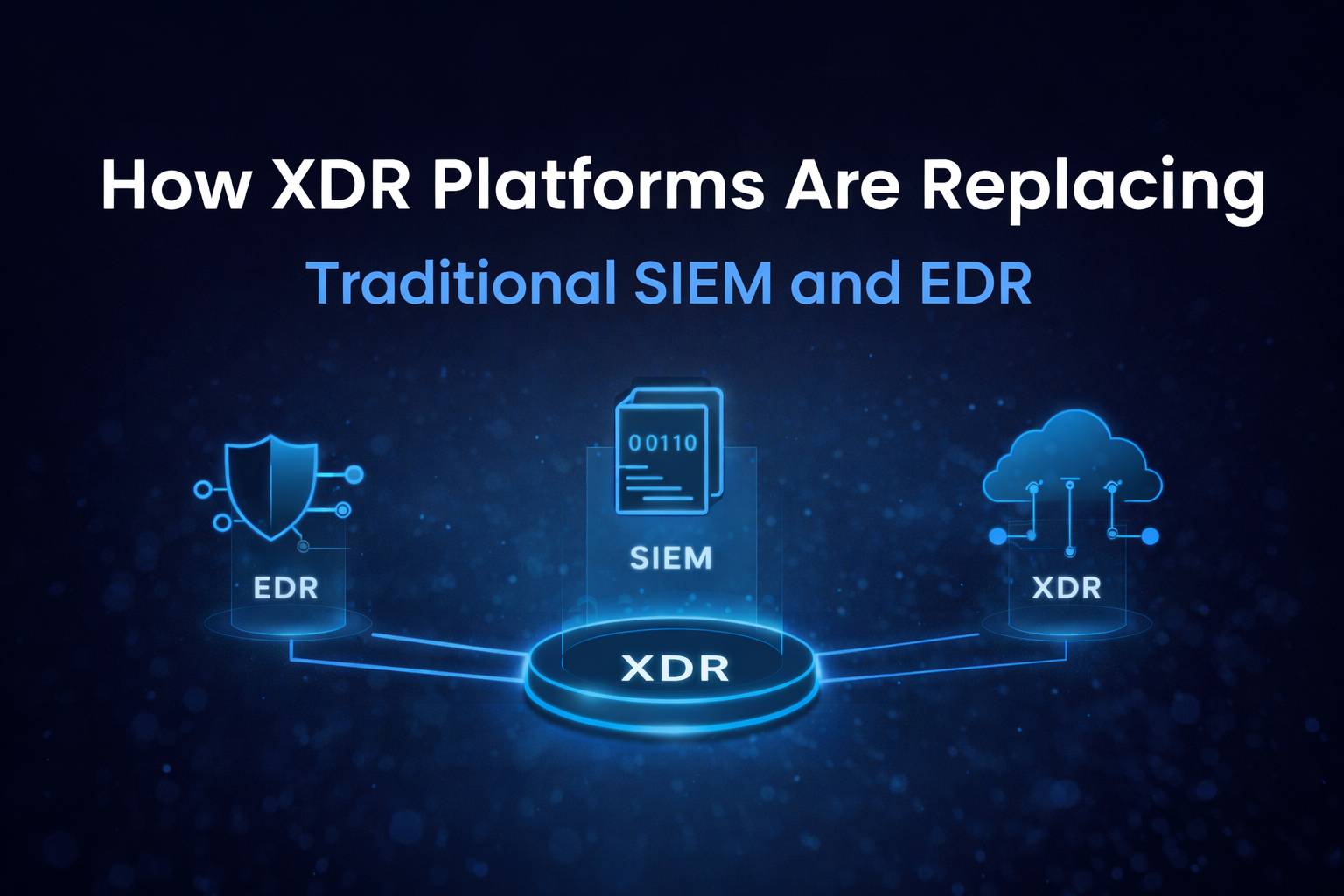
Cybersecurity tools were traditionally built in silos—SIEM for logs, EDR for endpoints, NDR for networks. While effective in isolation, this fragmented approach creates blind spots and slows response time.
Extended Detection and Response (XDR) changes this model by correlating signals across endpoints, cloud workloads, identities, and networks in one unified platform.
Why Traditional SIEM Is No Longer Enough
- Massive alert fatigue from uncorrelated data
- Slow investigations across multiple tools
- High operational overhead and tuning complexity
- Limited real-time response capability
XDR platforms centralize telemetry and apply analytics across all layers, dramatically improving visibility and response accuracy.
Key Benefits of XDR
- Unified threat detection across environments
- Faster investigation with shared context
- Reduced mean-time-to-detect (MTTD) and respond (MTTR)
- Better ROI by reducing tool sprawl
As attacks become multi-stage and multi-vector, XDR is becoming the default architecture for modern SOCs.